


The 16th Regional Network of National CT-P/CVE Coordinators meeting
15.10.2024
Sarajevo, Bosnia and Herzegovina
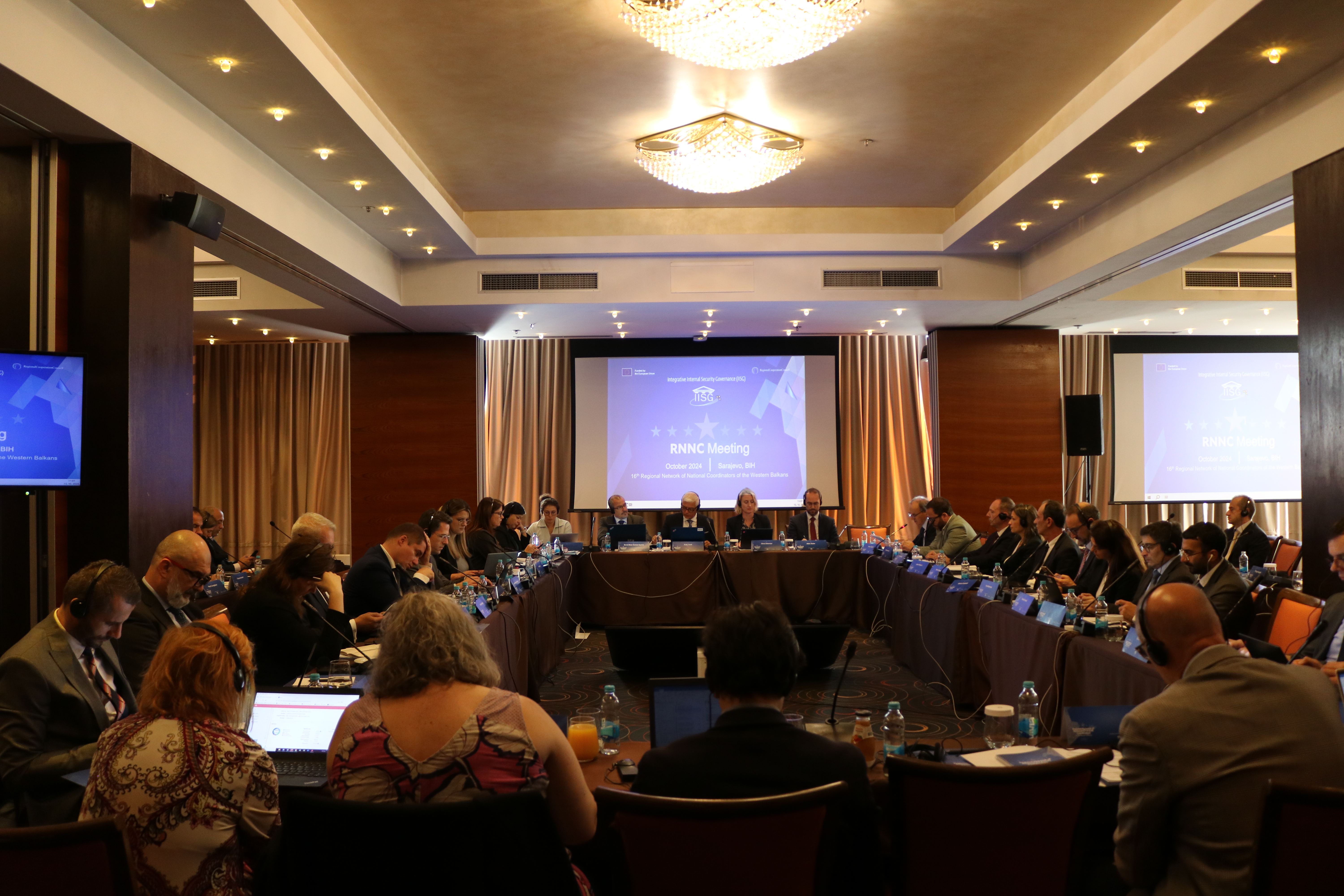
16th Regional Network of National CT-P/CVE Coordinators (RNNC) – Western Balkans
15 October 2024 | Sarajevo, Bosnia and Herzegovina
The 16th meeting of the Regional Network of National CT-P/CVE Coordinators (RNNC) brought together national coordinators, EU representatives, regional organizations, and international partners to review progress in counter-terrorism (CT) and prevention/countering violent extremism (P/CVE) across the Western Balkans. The meeting aimed to assess implementation of the Joint Action Plan (JAP), review emerging threat trends, and strengthen regional coordination mechanisms.
Opening remarks highlighted the continued complexity of the global and regional security environment, including the impact of ongoing geopolitical conflicts and their influence on radicalization dynamics. Particular concern was expressed regarding youth radicalization and the growing role of online platforms in spreading extremist content, reinforcing the need for stronger digital prevention and counter-narrative strategies.
Regional Security Developments and Threat Trends
Discussions confirmed that terrorism and violent extremism remain persistent threats across the Western Balkans, with evolving drivers including online radicalization, foreign influence, and links between organized crime and extremist networks. Participants highlighted the need for comprehensive national risk assessments, noting that gaps remain in several countries regarding unified threat evaluation frameworks.
The meeting also underlined the increasing importance of monitoring extremist content online, strengthening crisis communication capacities, and improving resilience against disinformation campaigns targeting vulnerable communities.
There was consensus that future policy responses must integrate technological tools, stronger financial investigation capacities, and enhanced information exchange mechanisms at national and regional levels.
Joint Action Plan (JAP) Implementation and Future Development
National coordinators provided updates on implementation of bilateral and regional CT arrangements under the JAP framework. Western Balkan partners reported progress in legislative alignment, institutional coordination, and development of local prevention structures, while also highlighting persistent challenges related to sustainable funding, specialized training, and rehabilitation and reintegration of returnees and offenders.
The JAP was recognized as a major political and operational success, contributing significantly to strengthening common security between the EU and the Western Balkans.
Looking ahead, discussions focused on development of a new JAP framework to address emerging threats such as digital radicalization, right-wing extremism, and hybrid security risks. The new framework is expected to be developed through extensive consultations, with adoption anticipated during future EU–Western Balkans ministerial processes.
The role of the European Commission in providing financial and technical support under IPA instruments was highlighted as essential for sustaining regional CT and P/CVE efforts.
Role of Local Authorities and Cities in Prevention
Presentations from partners including the Strong Cities Network emphasized the central role of municipalities in prevention efforts. Cities are often best positioned to identify early warning signs of radicalization and to implement community-based prevention initiatives.
Regional initiatives such as the Western Balkans Regional Hub aim to strengthen peer-to-peer exchanges between cities, support data-driven prevention programs, and foster multi-actor cooperation involving youth, women, civil society, and local institutions.
Participants noted that local authorities still face capacity gaps, limited mandates, and resource constraints, highlighting the need for continued targeted capacity-building support.
International Partner Contributions
International organizations continue to play a key role in strengthening regional prevention and response capacities. The United Nations Office of Counter-Terrorism supports member states through technical assistance, training, and counter-terrorism technology initiatives.
The Hedayah contributes through strategic communications support, research, and assistance in developing national CVE strategies and action plans. Its work includes teacher training, public awareness campaigns, and targeted messaging initiatives aimed at preventing radicalization.
Regional research and policy support were also presented by the Atlantic Initiative, which highlighted challenges related to foreign terrorist fighters and the need for evidence-based prevention programming in Bosnia and Herzegovina and across the region.
Capacity Building and Training Needs
Several partners emphasized the need for advanced specialized training, particularly for law enforcement agencies, probation services, and counter-terrorism analysts. Participants noted that while basic CVE training exists in many countries, advanced and standardized EU-level training remains limited.
Capacity-building priorities identified included:
- Counter-terrorism financing detection and investigation
- Strategic and crisis communications
- Risk assessment methodologies
- Online content monitoring and removal
- Rehabilitation and reintegration programming
In addition, discussions highlighted the importance of sustainable funding models to ensure long-term effectiveness of prevention programs and avoid interruption of successful initiatives.
Regional Cooperation and Information Sharing
Participants acknowledged improvements in operational communication between Western Balkan countries, particularly through structured regional meetings and technical exchanges. However, further improvements are needed to ensure proactive information sharing across national, regional, and international levels.
The importance of coordinated data mapping and needs assessment exercises led by regional coordination mechanisms was also highlighted, ensuring better alignment of donor support and avoiding duplication of efforts.
Conclusions and Way Forward
The meeting reaffirmed the strong commitment of Western Balkan partners and international stakeholders to strengthening regional cooperation in CT and P/CVE. Key priorities moving forward include development of the new Joint Action Plan, strengthening risk assessment capacities, enhancing digital prevention approaches, and expanding specialized training programs.
Participants agreed that sustained political commitment, coordinated donor engagement, and evidence-based policy development will be critical to addressing evolving security challenges. The RNNC framework remains a central platform for maintaining dialogue, sharing best practices, and ensuring coordinated regional responses to terrorism and violent extremism.